Got Featured? 30-Day Plan the Best PR for Music Artists Use to Make It Count
You got the feature. Your name is in print. Now what? Most artists post the link once and move on. That is a mistake. A press feature does not last forever. It fades fast if you do nothing with it. The best PR for music artists is not just landing the placement. It is what you do in the 30 days after the article drops.
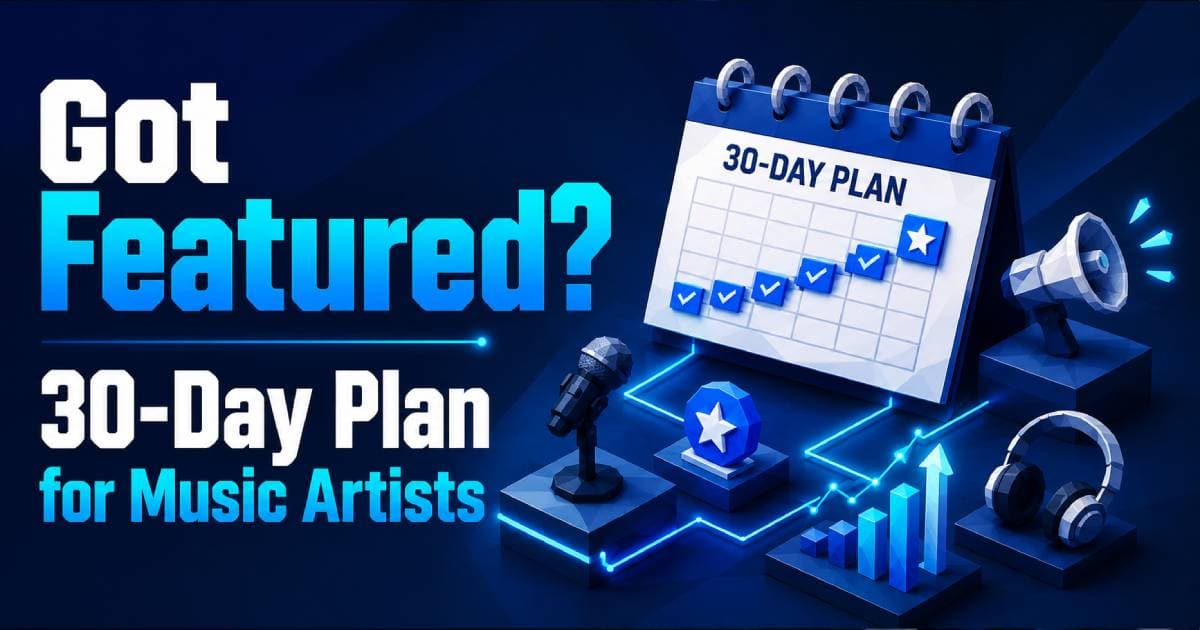
This is the plan. Print it. Save it. Open it the morning your feature goes live.
Why the next 30 days matter most
Right now, more than 100,000 new songs hit streaming services every single day. That number comes from the IFPI Global Music Report 2025, which uses data from Luminate. The wave is huge. Most new music gets lost in it.
A press feature is one of the few things that helps you stand out. Fans are out there looking. The IFPI's Engaging With Music report found that 44% of streaming users find a new artist at least once a week. That is a real window. But it does not stay open long.
This is also why working with the right music PR company matters so much in the first place. The feature is the start, not the end. The next four weeks are where the real work happens.
Week 1: Days 1 to 7. Save it and share it
Step one is simple. Hold on to the article and start to spread it.
Save the article. Take a screenshot. Save the URL. Download a PDF. News sites change all the time. Posts get pulled. You want your own copy.
Update every bio. Spotify for Artists. Instagram. TikTok. YouTube. Your website. Your EPK. People see your bio in the first few seconds. Make sure the feature is right there. This is part of your personal brand, which lives in every place your name shows up online.
Add an "As featured in" line to your site. Use the logo of the outlet. Put it near the top of your home page. People trust what they see other people trust.
Post once on social. Keep it short and humble. Tag the writer. Thank them. Skip the victory lap.
Email your list. A short note works. People who signed up want news from you. Do not skip them.
Tell your team. Your manager. Your agent. Anyone close to you. They will share it with people you cannot reach on your own.
Week 2: Days 8 to 14. Send it everywhere
Week two is when the feature does real work. Now you use it to open doors.
Pitch playlist curators. Send the article when you ask for a spot. It is proof that other people are paying attention. Editors say yes more often when an artist already has buzz.
Pitch venue bookers and festival programmers. Aim for the next booking cycle, not the one happening right now. Bookings get planned six to twelve months out. Your feature is a fresh reason to reach out.
Pitch sync agents and music supervisors. Sync is when your song lands in a TV show, ad, or film. It is one of the biggest ways music makes money today. Sync teams look for press as a sign of who is rising.
Reach out to managers and labels you have talked to before. Not cold inboxes. People who replied to you in the past. A new feature is a good reason to bring back an old chat.
Pitch other writers. This is how coverage builds. Say something like: "Forbes covered this angle. Here is one that fits your readers." This is the music PR playbook indie artists actually need.
Update your one sheet and EPK. Add the new logo. Anyone you pitch from now on should see it within ten seconds.
Week 3: Days 15 to 21. Make it grow
Now you stack more wins on top of the first one.
Pin the post on every profile. Pinned content is what people see first when they land on your page. Use that space.
Run a small paid social test. Spend $200 to $500. Use the article in the ad. Press-led ads often beat plain music ads. The press logo shows trust.
Apply for grants, residencies, and festivals. Anything you have been eyeing. The "As featured in" line on a form changes how reviewers look at you.
Pitch a smaller paper or podcast. Local press. Genre blogs. Podcasts in your lane. The first feature opens doors the second one walks through.
Check your Google result. Search your name. Search your single. Make sure the feature shows up high. This is what labels and supervisors see when they look you up next.
Earned media is what people call press coverage you did not pay for. It carries a kind of trust that ads cannot buy. A Nielsen global study found that 92% of people trust earned media more than other forms of advertising. That is exactly how press features build brand trust. One ad runs and stops. One good article keeps showing up in search for years.
Week 4: Days 22 to 30. Track what changed
This is the step most artists skip. Do not skip it.
Write down your numbers from before the feature. Then write them down again now. What changed?
- Spotify monthly listeners
- Instagram followers
- TikTok followers
- Email subscribers
- Website visits in the last 30 days
- DMs and inbound notes
- Bookings booked
- Sync inquiries
Now write a one page case study. Three lines:
- The biggest thing that changed since the feature.
- The most surprising thing that happened (a DM, a booking, a new contact).
- The next pitch this opens up for you.
That case study is the most useful thing you will write all year. Every pitch after this one starts with the line: "since my feature in [outlet], here is what has happened." It works.
One last thing
A press feature is not a moment. It is proof. Proof that keeps showing up on Google. Proof that lives in the data AI tools pull from when fans ask for new music. Proof a label can find six months from now when they look you up.
But the proof only works if you make it work. The artists who grow after a feature are the ones who treat day one as the starting line, not the finish line.
Some music PR firms stop at the placement. The best PR for music artists keeps going. Now you have the plan to keep going too.